What are supergiant stars known for in terms of size?
Very large size. Red supergiants can reach hundreds of times the Sun's radius, while hotter blue supergiants are usually smaller but still enormous.
Compare supergiant sizesA source-backed guide to massive stars
A clear guide to what supergiant stars are, why they become so large and bright, and what happens when they reach the end of their lives.
Short answer: a supergiant is an evolved, extremely luminous massive star, usually luminosity class I. It is not just a normal star made bigger.
60-second definition
A supergiant star is a very luminous evolved star with low surface gravity and distinctive spectral features. The class includes red supergiants like Betelgeuse and blue supergiants like Rigel.
Luminosity depends on radius and temperature. That is why a cool red supergiant can still outshine the Sun by tens of thousands of times.
Very large size. Red supergiants can reach hundreds of times the Sun's radius, while hotter blue supergiants are usually smaller but still enormous.
Compare supergiant sizesExtremely high luminosity. Their huge surface area, high temperature, or both allow them to release far more energy than the Sun.
See their defining characteristicsMany undergo core collapse. The star may explode as a supernova and leave behind a neutron star or black hole, although some collapses can be faint.
Follow the supergiant life cycleChoose a star and watch its estimated surface expand across the planetary orbits. The ranges reflect measurement uncertainty.
The Sun remains far inside Mercury's orbit.
Main types
Examples include Betelgeuse, Antares, and UY Scuti. Their outer layers are extended, unstable, and dusty.
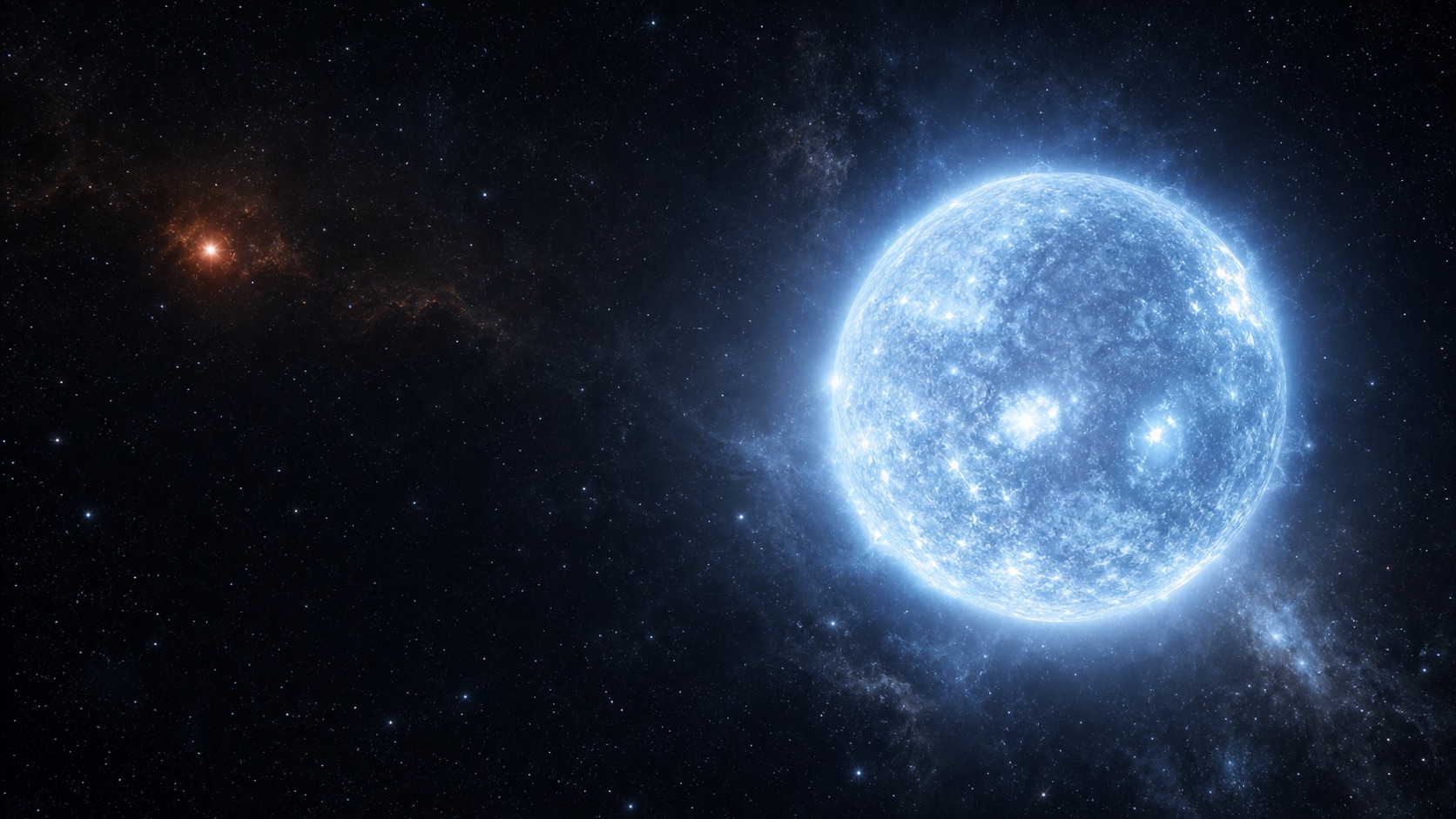
Blue supergiantsExamples include Rigel. They are usually more compact than red supergiants but radiate huge amounts of energy.
Life cycle
A star forms with enough mass to burn fuel rapidly and build a heavy core.
The star expands, changes color, loses mass, and becomes extremely luminous.
Many end as supernovae, leaving neutron stars or black holes.
Guides by search intent
The defining traits of supergiant stars: luminosity class, radius, mass, temperature, spectra, winds, and short lifetimes.
Evolution The life cycle of a supergiant starHow massive stars become supergiants, burn heavier elements, and end as supernovae, neutron stars, or black holes.
Comparison Red giant vs supergiantA clear comparison of red giants and supergiants, including mass, size, luminosity, fate, and whether the Sun becomes one.
Types Red supergiant stars explainedWhat red supergiant stars are, why they are so large, and examples including Betelgeuse, Antares, and UY Scuti.
Types Blue supergiant stars explainedA guide to blue supergiants: temperature, luminosity, spectra, examples, and how they differ from red supergiants.
Rankings The largest supergiant starsA cautious guide to the largest known supergiant stars and why rankings change as measurements improve.
Interactive Supergiant star size comparisonCompare the Sun, Betelgeuse, Rigel, Antares, Deneb, and UY Scuti by radius, mass, temperature, luminosity, and orbit reach.
Simple guide Supergiant stars for kidsA simple explanation of supergiant stars for younger readers, with analogies that stay scientifically careful.
Reference A list of famous supergiant starsA useful list of famous supergiant stars with type, constellation, color, and why each one matters.
Famous examples
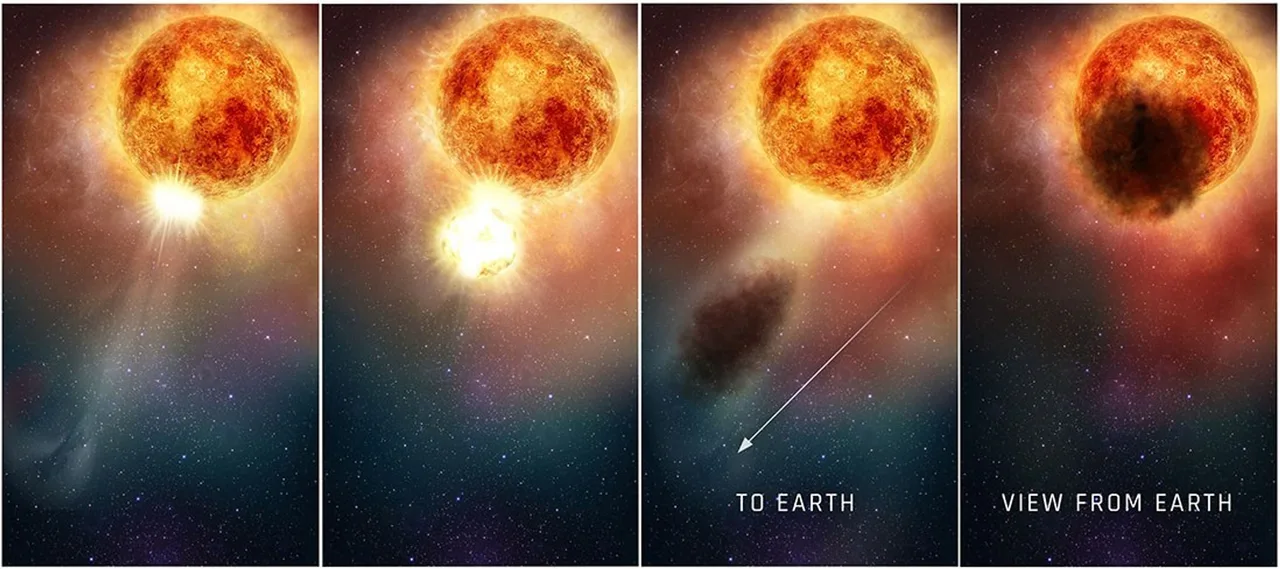
Betelgeuse is a nearby red supergiant in Orion and one of the best real examples for understanding unstable late-stage massive stars.
Star profile Rigel, a blue supergiant in OrionRigel is a hot blue-white supergiant and a useful counterexample to the idea that all supergiants are red and bloated.
Star profile Antares, the red supergiant in ScorpiusAntares is a red supergiant whose name is linked to Mars because of its reddish color. It is a strong example of a cool, huge, evolved massive star.
Star profile Deneb, a luminous supergiant in CygnusDeneb looks modest compared with some nearby bright stars, but it is intrinsically enormous in luminosity because it is very far away.
Star profile UY Scuti and the largest-star questionUY Scuti is famous because radius estimates place it among the largest known stars. The careful version: it is an enormous red supergiant or hypergiant candidate with substantial measurement uncertainty.
Reference table
| Star | Type | Radius | Luminosity | Reach if replacing the Sun |
|---|---|---|---|---|
| Betelgeuse | Red supergiant | 700-900 R_sun | 90,000-150,000 L_sun | 3.3-4.2 AU |
| Rigel | Blue supergiant | 70-80 R_sun | 100,000-200,000 L_sun | 0.33-0.37 AU |
| Antares | Red supergiant | 600-800 R_sun | 60,000-90,000 L_sun | 2.8-3.7 AU |
| Deneb | White-blue supergiant | 100-200 R_sun | 100,000-200,000 L_sun | 0.47-0.93 AU |
| UY Scuti | Red supergiant / hypergiant candidate | 900-1,700 R_sun | 80,000-150,000 L_sun | 4.2-7.9 AU |
FAQ
No. It is among the largest candidates, but rankings change because red supergiant radii are hard to measure.
Only a small share of stars begin with enough mass to become supergiants, and their high fuel use gives them much shorter lives than stars like the Sun.
They are huge. Their large surface area makes total luminosity enormous even when their surface temperature is lower than the Sun's.
Yes. Supergiants are an observed luminosity class of stars. Betelgeuse, Rigel, Antares, and Deneb are familiar examples, although their sizes and evolutionary stages differ.
Research basis